Sunday, December 6, 2009 - Brantley Lake State Park, Carlsbad NM
< previous day | archives | next day >
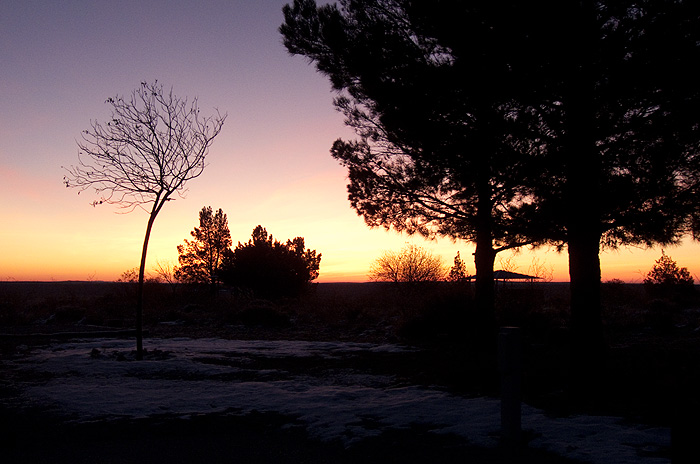
Dawn, Brantley Lake State Park, Carlsbad NM, December 5, 2009
Yesterday dawned bright and sunny - then clouded over and stayed cold. Today dawned bright and sunny and the sun stayed around most all day, and took the rest of the remaining snow over the hill with the sunset. We like it. These big, colorful New Mexico sunrises and sets never fail to lift the soul.
It's nice to finally have a day with no nagging repair issues to worry about and I've given myself a day off to fool with the website and walk in the sun.
Collectanea
I've been wanting for a long time to make better use of my collection of passages I've clipped over the years and this afternoon I spent some time working on a scheme for reorganizing them. Once I get the formatting worked out on a few test pages I'll have to go in do some minor editing on each of the hundreds of pages. This will be a tedious task and I want to be sure to get it right the first time. It would be no fun doing it twice! I stuck a box with a random passage from the collection at the foot of these pages as a test to see if it works out.
Night camp
Site 37 - Brantley Lake State Park, Carlsbad NM
- Verizon cell phone service - Access is via Extended Network, roaming
- No Verizon EVDO service - access is via the Extended Network and service varies with many drop-outs.
- See a list of the nights I've camped at Brantley Lake State Park
- Locate Brantley Lake State Park on my Night Camps map
- Go to Brantley Lake State Park website
- Locate services on my Resources map
- Check the weather here
Defenestrate
DEFENESTRATE: throw somebody or something out of window: It is quite entertainng to defenestrate paper airplanes.
Evelyn Waugh