Wednesday, December 10, 2008 - Twiltley Branch Campground, Collinsville MS
< previous day | archives | next day >
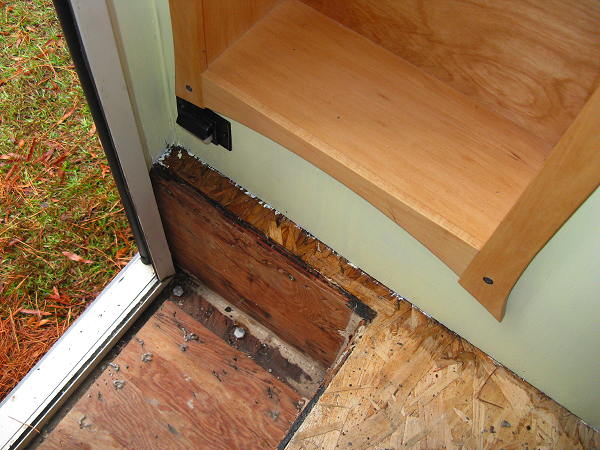
Water on the floor by the door, Dec 10, 2008, Twiltley Branch Campground, Collinsville MS
It's a long way to the bath house from here
Maybe half a mile. Certainly farther than I wanted to walk through the woods in a blowing thunderstorm. I was tempted to hunker down here at Site 39 and hope for the best. In the end that's what the other three campers here did but since the Campground Attendant came around to warn us to take shelter an hour or so before the storm I felt I didn't want to risk having him come by at the height of the blow looking for me when I didn't show up at the bath house. So I unhooked and drove over, parked as far from big trees as I could, and ended up staying camped there in the road all night. That gave me a chance to do my laundry this morning before heading back to Site 39.
These darned leaks are driving me nuts
I've pretty well run out of ideas about where these leaks are coming from. I'm collecting my thoughts at A Tale of Two Leaks.
Night camp
Site 39 - Twiltley Branch Campground, Collinsville MS
- This is a quiet, well maintained COE campground with level gravel sites, reservoir views, electric & water
- There is good biking on the park roads
- Most sites are wooded so solar gain is limited for those with solar panels
- Good Verizon cell phone service - Access is via Extended Network, roaming
- No Verizon EVDO service - access is via the Extended Network and service varies from slow to barely useable
- Find other references to Twiltley Branch
- List the nights I've camped here
- Check the weather
- Reserve a site
- Get a map
Waiting
I remember walking in art galleries, through the nineteenth century: the obsession they had then with harems. Dozens of paintings of harems, fat women lolling on divans,turbans on their heads, or velvet caps, being fanned with peacock tails, a eunich in the background standing guard. Studies of sedentary flesh, painted by men who'd never been there. These pictures were supposed to be erotic, and I thought they were, at the time; but I see now what they were really about. They were paintings about suspended animation; about waiting, about objects not in use. They were paintings about boredom.
The Handmaid's Tale, Margaret Atwood