Wednesday, December 03, 2008 - Foscue Creek Park, Demopolis AL
< previous day | archives | next day >
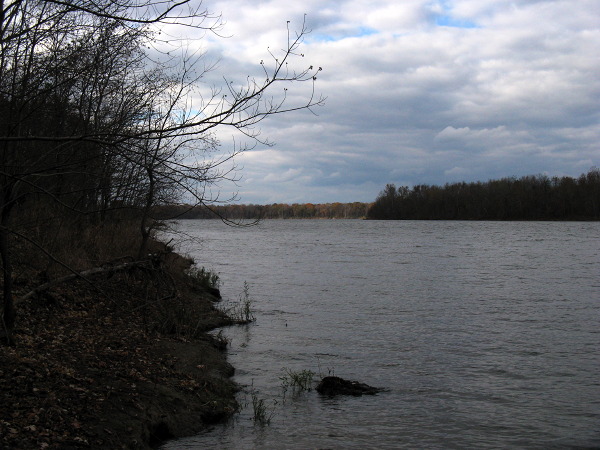
On the Tombigbee, Dec 01, 2008"
Preliminary report on the vent sealing project
[Dec 4] After this mornings fairly steady drenching rain there appears to be some progress with the leaks. The leak resulting in the stream across the floor shown in the photo here on November 15th seems to be fixed. But the other one under my desk / aft of the shower leaked just a tiny bit. I'll have to reserve final judgement on the one by the door until after a heavier rain or two but the other one obviously needs further attention. Darn these things are elusive!
Night camp
Site 37 - Foscue Creek Campground, Demopolis AL
- This is a well maintained US Army Corps of Engineers campground with level paved sites, most with full hookups
- Many sites overlook the water of the inlets off Demopolis Lake on the Tombigbee River
- There is good biking on the park roads
- The campground is pretty full Thanksgiving week and is generally booked solid the weekend of the Demopolis Christmas on the River festival in early December.
- Poor Verizon cell phone service - access is via Extended Network, roaming
- No Verizon EVDO service - access is via the Extended Network and service varies is slow but reliable
- Only 3 miles to Wal-Mart and other services in Demopolis AL
- Find other references to Foscue Creek
- List the nights I've camped here
- Check the weather
- Reserve a site
- Get a map
What a Deale
What a deale of cold busines doth a man mis-spend the better part of life in! in scattering complements, tendring visits, gathering and venting newes, following Feasts and Playes, making a little winter-love in a darke corner.
Don't know the source - possibly Ben Jonson