Tuesday, December 02, 2008 - Foscue Creek Park, Demopolis AL
< previous day | archives | next day >
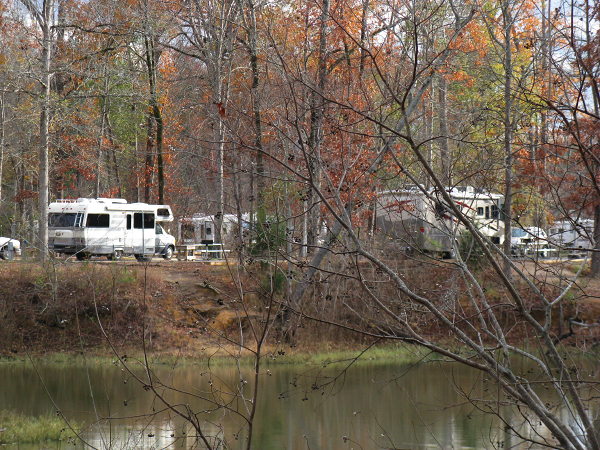
LD at site 37 at Foscue Creek Park, Dec 01, 2008
Painting the kitchen
I've been timid about painting the interior of the RV. I have concerns about the paint sticking permanently to the vinyl panelling and concerns about covering areas I would regret not leaving original. But I'm quickly getting over that. If the paint falls off I'll put it back on. It's going to be SO much better looking in here with the dark panelling painted over. I'll post a picture or two when I get farther along with the project.
Night camp
Site 37 - Foscue Creek Campground, Demopolis AL
- This is a well maintained US Army Corps of Engineers campground with level paved sites, most with full hookups
- Many sites overlook the water of the inlets off Demopolis Lake on the Tombigbee River
- There is good biking on the park roads
- The campground is pretty full Thanksgiving week and is generally booked solid the weekend of the Demopolis Christmas on the River festival in early December.
- Poor Verizon cell phone service - access is via Extended Network, roaming
- No Verizon EVDO service - access is via the Extended Network and service varies is slow but reliable
- Only 3 miles to Wal-Mart and other services in Demopolis AL
- Find other references to Foscue Creek
- List the nights I've camped here
- Check the weather
- Reserve a site
- Get a map
Fit In Better
We Americans hail from families of immigrants newly arrived, seeking approval from better-established immigrants deposited by the previous boat. Even the best adjusted of us have inherited a message of social inferiority from generations of moms telling generations of kids to fit in better, speak English better, display better manners, etc. I suggest that this heritage weighs on us more than we want to acknowledge at levels we don't want to address.
Britt Blaser, Escapable Logic 2/20/2003