Tuesday, December 18, 2007 - Foscue Creek Park, Demopolis AL
< previous day | archives | next day >
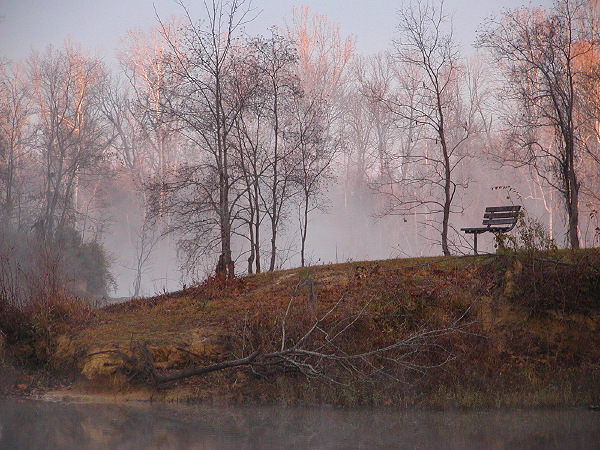
Fallen, Foscue Creek Park, Demopolis AL, December 18, 2007
My internet connection is giving me fits this morning. The connection keeps dropping out. Guess I have some diagnostic work to do today.
Later in the morning: I spent some time fiddling with the connections to the Kyocera KR1 router, Verizon USB720 modem and Wilson Electronics amplifier I use and couldn't find anything amiss so I guess I must have had a particularly weak cell signal here this morning. My connection seems to be holding fine now. I use a Verison BroadbandAccess Data Plan and this isn't Verison country here at Foscue Creek Park, even though Verizon's Coverage Locator claims otherwise. The signal here is weak and the web access speed is barely above dial-up but I can live with that for such a fine place to hang out.
Night camp
Site 42 - Foscue Creek Campground, Demopolis AL
- This is a well maintained US Army Corps of Engineers campground with level paved sites, most with full hookups
- Many sites overlook the water of the inlets off Demopolis Lake on the Tombigbee River
- There is good biking on the park roads
- The campground is pretty full Thanksgiving week and is generally booked solid the weekend of the Demopolis Christmas on the River festival in early December.
- Poor Verizon cell phone service - access is via Extended Network, roaming
- No Verizon EVDO service - access is via the Extended Network and service varies is slow but reliable
- Only 3 miles to Wal-Mart and other services in Demopolis AL
- Find other references to Foscue Creek
- List the nights I've camped here
- Check the weather
- Reserve a site
- Get a map
Concentrated Space Intensifies Everything
A small, concentrated domestic space intensifies everything. It’s like the fire we live around—move it close together and the flame flares up, spread it apart and the fire goes out. We have always lived in small houses, but this one is the smallest and the best. Here I feel all my loose and wandering thoughts are gathered up and made whole. It is an antidote to a world of distractions. It is a world unto itself. It is almost more myself than I am.’