Sumner Lake State Park, Fort Sumner NM
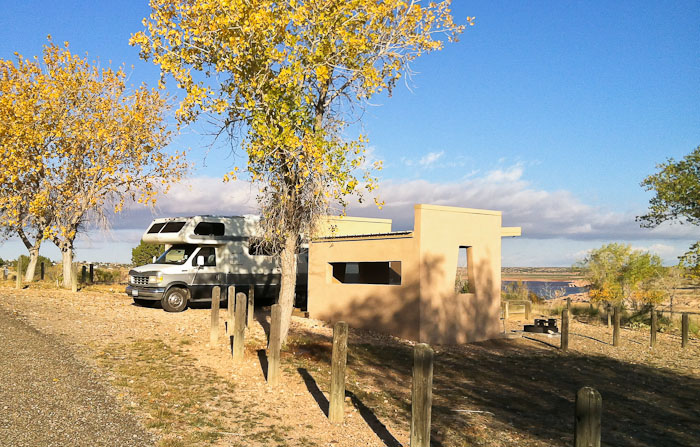
Morning at Site 34, Sumner Lake State Park, Fort Sumner NM, November 2, 2011
Situated 16 miles north west of Fort Sumner NM off US 84, Sumner Lake State Park is a good sized park with several campgrounds set around the dam. Sumner Lake State Park offers many activities, such as camping, hiking, swimming, wildlife viewing and fishing. The lake is home for many warm water species including walleye, bass, crappie, and channel catfish.
Sumner Lake State Park, Fort Sumner NM
- Verizon cell phone service - fairly good signal
- No Verizon EVDO service - connection is very slow.
- Go to Sumner Lake State Park website
- Go to Sumner Lake State Park on my Night Camps map
- Check the weather here
Nights I've camped here
- Tuesday, November 1, 2011 - Sumner Lake State Park, Fort Sumner NM
- Wednesday, November 2, 2011 - Sumner Lake State Park, Fort Sumner NM
- Thursday, November 3, 2011 - Sumner Lake State Park, Fort Sumner NM
- Friday, November 4, 2011 - Sumner Lake State Park, Fort Sumner NM
- Saturday, November 5, 2011 - Sumner Lake State Park, Fort Sumner NM
- Sunday, November 6, 2011 - Sumner Lake State Park, Fort Sumner NM
From Knowledge to Wisdom
Wisdom is a product of a process. This process begins with information, proceeds through knowledge, and through what a less gifted poet, Edgar Guest, called "a heap of living," ends in wisdom.
... Wisdom, when it comes, usually arrives late in life. I've known some people who were wise in their early thirties and others who died old without a clue. Most philosophers were of the mind that a person should be at least forty years of age to have enough learning experiences. Now it seems that it is much too young. The step from knowledge to wisdom is the longest one in a person's life.