Saturday, March 10, 2012 - City of Rocks State Park, Faywood NM
< previous day | archives | next day >
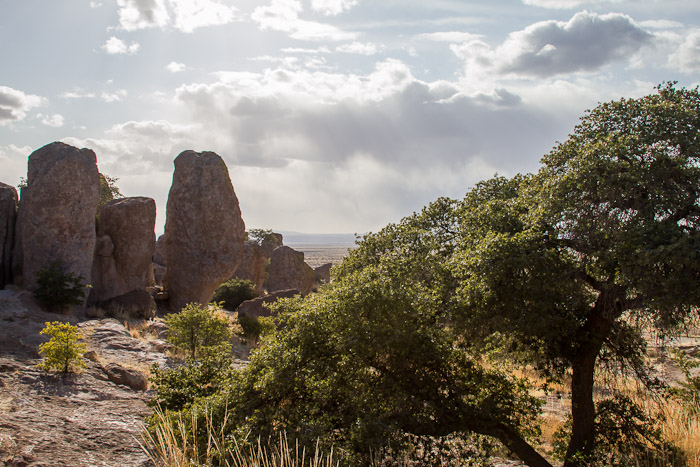
Emory Oak, City of Rocks State Park, Faywood NM, March 8, 2012
Two oaks
Two kinds of oak trees grow here - Emory oaks and the smaller gray oaks.
It snows here too - got a few flurries this cold overcast morning.
Night camp
Site 4 Cygnus - City of Rocks State Park, Faywood NM
- Verizon cell phone service - fairly good signal - best on west side of the park
- Verizon EVDO service - faster than many places I've camped
- Go to City of Rocks State Park website
- Locate City of Rocks State Park on my Night Camps map
- Check the weather here
First Find What's Truly Significant
Zen Students and photographers have much in common. Both are acutely visionary, concerned with the practicalities of light and darkness, perception and clarity. The pursuit of either of these practices demands that those involved first find what's truly significant in their lives before they can ever hope to turn this significance into something that can be seen by others.
Caught in Fading Light: Mountain Lions, Zen Masters, and Wild Nature Gary Thorp