My Clippings File An Introduction | Collectanea

Collectanea - American History - Art and Sculpture - Finger-Ring Draw - Food and Cooking - Humor - Natural Science - Philosophy - Politics and World Affairs - Word Play - On Writing

\Col`lec*ta"ne*a\, n. pl. [Neut. pl. from L. collectaneus collected, fr. colligere. See {Collect}, v. t.] Passages selected from various authors, usually for purposes of instruction; miscellany; anthology. Webster's 1913

From a passage selected at random

That Ideas Should Freely Spread

If nature has made any one thing less susceptible than all others of exclusive property, it is the action of the thinking power called an idea, which an individual may exclusively possess as long as he keeps it to himself; but the moment it is divulged, it forces itself into the possession of every one, and the receiver cannot dispossess himself of it. Its peculiar character, too, is that no one possesses the less, because every other possesses the whole of it. He who receives an idea from me, receives instruction himself without lessening mine; as he who lights his taper at mine, receives light without darkening me.

That ideas should freely spread from one to another over the globe, for the moral and mutual instruction of man, and improvement of his condition, seems to have been peculiarly and benevolently designed by nature, when she made them, like fire, expansible over all space, without lessening their density in any point, and like the air in which we breathe, move, and have our physical being, incapable of confinement or exclusive appropriation.

more...

Mother's habit of clipping stuff rubbed off on me early and it stuck. She clipped mostly recipes but I'm more of a generalist. I'll clip anything that grabs my fancy.

Writing From the Inside Out
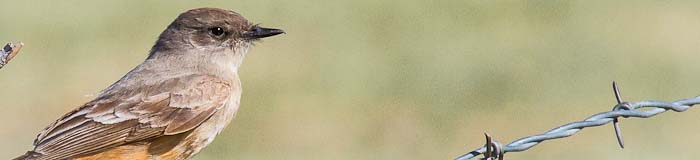
"It takes a while - often years - for the writer to get to appreaciate his effect on others..."

A young writer, if he is unknown, can be at a party and watch what everyone is doing. If he has a marveluos ear for dialog, he can wake up the next morning and remember all that was said and how it was said. He is a bird on a branch. Sees like a bird and writes books that are extraordinarily well observed. But once he is successful, especially if that happens quickly, it's as if the bird were now an emu. It cannot fly. It grows haunches and foreshoulders and a mane: lo and behold, it is a lion. And everyone is looking at the lion, including the birds. But it is a lion with the heart of a bird and the mind of a bird. So there is a terrible period when the transmogrified emu is trying to live like a lion and has little talent for it. Then the beast begins to experiment. When it runs, it now sees other animals scamper. It takes a while - often years - for the writer to get to appreaciate his effect on others, and even longer to begin to understand human beings again. In the old days, he could write about friends, enemies, and strangers by intuition, by induction; now he puts it together by deduction. Of course, he does have more material on which to work his deductions.

Birds and Lions, Norman Mailer, the New Yorker, December 23 & 30, 2002

clipped December 22, 2002

Collections: On Writing - Philosophy

Collectanea - American History - Art and Sculpture - Finger-Ring Draw - Food and Cooking - Humor - Natural Science - Philosophy - Politics and World Affairs - Word Play - On Writing