Thursday, March 17, 2011 - Hidden Valley RV Park, Tijeras NM
< previous day | archives | next day >
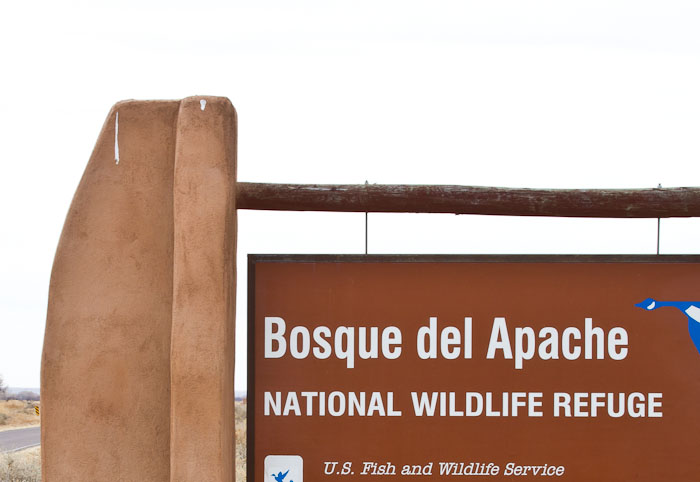
Poo, Bosque del Apache National Wildlife Refuge, San Antonio NM, March 6, 2011
Oh poo
I drove up to Albuquerque yesterday so I could easily make it to Tom's RV Services and Sales first thing in the morning right on schedule to get the new Dometic refrigerator they ordered for me installed.
I and the refrigerator arrived on schedule.
However. On the advise of two of their suppliers, who told them the Dometic was no longer available, they ordered a Norcold instead of the Dometic we agreed on. The Norcold is an inch too tall. I could have told them that - and that the Dometic is indeed available. The Dometic being the only refrigerator that will fit the cabinet in my rig was one of the reasons I decided to replace the unit instead of rebuilding it. I was concerned the Dometic might indeed be discontinued someday and then I would be stuck.
Tuesday, the Dometic has been shipped and will be here for a Tuesday install. Looks like I'll be hanging out in ABQ living out of a cooler a while yet...
Night camp
Site 7 - Hidden Valley RV Park, Tijeras NM
- This is an older, 100 site, dirt pad, full hookup, RV park on a wooded hillside. The sites are a little small and close together by today's standards but are quite serviceable, quiet and clean.
- Verizon cell phone and Broadband service are available here with a strong signal.
- Locate Hidden Valley RV Park on my Night Camps map
- Check the weather here
A Mere Bristle on the Hog
It is strange to me that life itself doesn't strike the average person as all that impressive, but for some reason "intelligent" life does. When you consider life as a whole, intelligence is a mere bristle on the hog.
A Year in the Maine Woods, Bernd Heinrich