Wednesday, February 23, 2011 - Bosque Birdwatchers RV Park, San Antonio NM
< previous day | archives | next day >
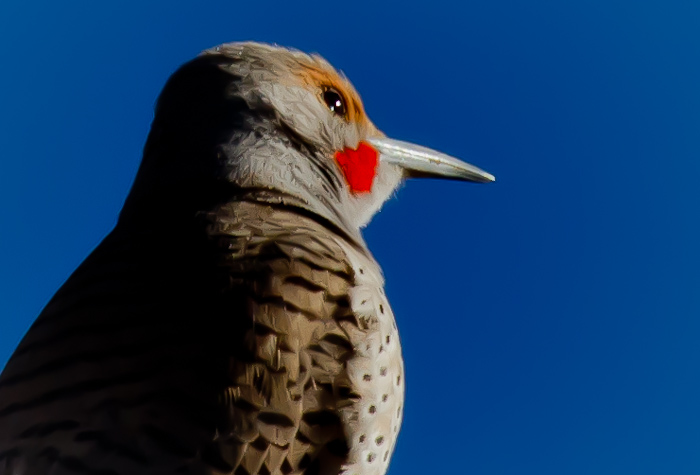
Northern Flicker, Bosque Birdwatchers RV Park, San Antonio NM, February 21, 2011
Tongue of the Flicker
Bet you didn't know the Flicker has a really long tongue.
Northern Flickers eat mainly insects, especially ants and beetles that they gather from the ground. They also eat fruits and seeds, especially in winter. Flickers often go after ants underground (where the nutritious larvae live), hammering at the soil the way other woodpeckers drill into wood. They’ve been seen breaking into cow patties to eat insects living within. Their tongues can dart out 2 inches beyond the end of the bill to snare prey. Other invertebrates eaten include flies, butterflies, moths, and snails. Flickers also eat berries and seeds, especially in winter, including poison oak and ivy, dogwood, sumac, wild cherry and grape, bayberries, hackberries, and elderberries, and sunflower and thistle seeds.
Source: Northern Flicker, Life History, All About Birds - Cornell Lab of Ornithology
Night camp
Site 10 - Bosque Bird Watcher's RV Park, San Antonio NM
- This is a basic, small Mom & Pop RV Park with full hookups.
- Verizon cell phone and Broadband service are available here with a strong signal.
- Locate Bosque Bird Watcher's RV Park on my Night Camps map
- Click for Google street view
- Check the weather in San Antonio NM
They do not Intrude on Each Other
The San Francisco Mountain lies in northern Arizona, above Flagstaff, and its blue slopes and snowy summit entice the eye for a hundred miles across the desert. About its base lie the pine forests of the Navajos, where the great red-trunked trees live out their peaceful centuries in that sparkling air. The pinons and scrub begin only where the forest ends, where the country breaks into open, stony clearings and the surface of the earth cracks into deep canyons. The great pines stand at a considerable distance from each other. Each tree grows alone, murmurs alone, thinks alone. They do not intrude on each other. ...
The Song of the Lark, Willa Cather, p265, Houghton Mifflin Co paperback edition 1987