Wednesday, December 29, 2010 - LoW-HI RV Ranch, Deming NM
< previous day | archives | next day >
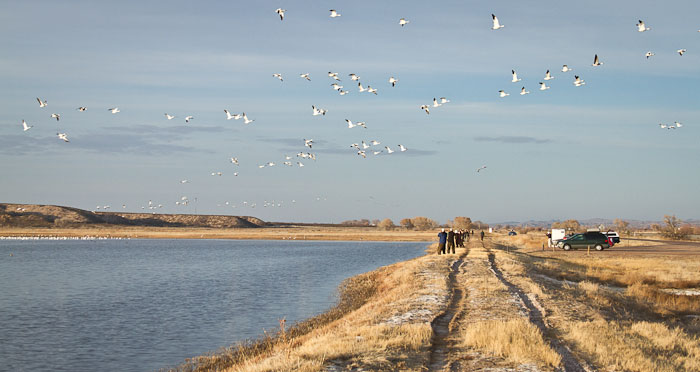
Snow Geese, Bosque del Apache National Wildlife Refuge, San Antonio NM, February 1, 2010
Morning at Tinley-Tee Tire & Auto Services
This morning I stopped at the tire shop JT's recommended, Tinley-Tee Tire & Auto Services, to see what they recommend to replace the worn rear duallies on the Lazy Daze and to see when they might be able to put them on. They recommended Firestones, had them in stock, quoted me a fair price, and put them right on. There. That's done. Now everything is ship-shape and I'm ready to roll roll roll.
Quick, competent, friendly service. We like it.
Night camp
Boondocked - LoW-HI RV Ranch, Deming NM
- This is a spacious 65 site campground with most sites offering full hookups.
- Locate LoW-HI RV Ranch on my Night Camps map
- Verizon cell phone - strong signal
- Verizon Broadband - strong signal but often slow
- Check the weather in Deming NM
Scarcity
Each age works to remove its most prominent scarcity and, having succeeded and therefore become irrelevant, holds on...
Escapable Logic, Britt Blaser, January 16, 2003