Saturday, August 15, 2009 - Red Rock, East Chatham NY
< previous day | archives | next day >
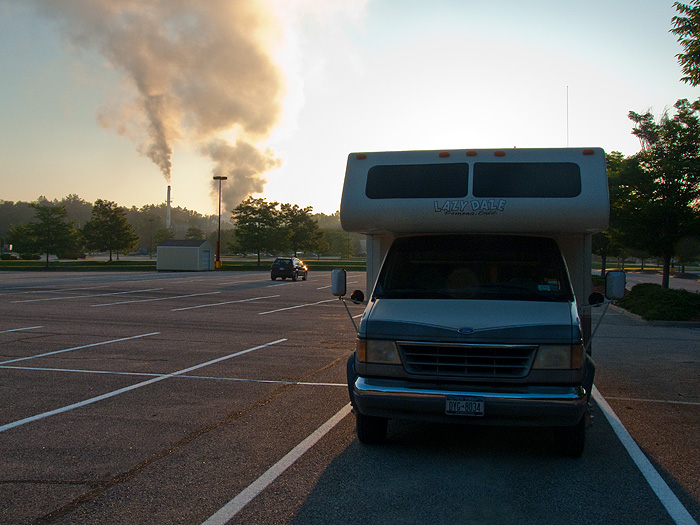
The Midnight Striper, August 15, 2009
I spent last night in the Walmart parking lot in Pittsfield MA. About midnight I awoke to the sound of a small engine accelerating and decelerating. Strange. I look out and here's a guy on a beat up old articulated garden tractor with a striping machine hanging out front with a couple headlights carefully aimed just ahead of it. He's out there striping the parking lot. Fast. He'd slow a bit - stripe a line - then accelerate across to the next line, brake sharply and stripe the next line. Back and forth across the lot. He was done in no time flat and put nary a stripe on my rig. Cool.
BTW, that's a Crane & Co papermill steaming in the background - I wonder if that's where Crane makes currency paper.
Night camp
On my property off Less Traveled Road - The Home Place, Red Rock, East Chatham NY
- I used to camp in a few locations on what little I had left of the family farm
- In the driveway by the house
- Across the road where the barn once stood
- On the 20 acre piece off Less Traveled Road
- Now, with the kind support of the friends who now own the place, I camp across the road where the barn once stood.
- Verizon cell phone service - Terrible, barely usable with an amplifier
- Verizon EVDO service - Terrible, barely usable with an amplifier
- Find other references to Home Place
- List the nights I've camped here
- Check the weather here
On Food and Freedom
Here I've clipped a few paragraphs from the excellent talk Return to Slavery: Will you be eating China's dust for breakfast? by Billie Best, Executive Director, Regional Farm and Food Project given on April 19, 2006 to the Rensselaer Polytechnic Institute, Ecologic Club - Troy, New York, On the occasion of Ecologic Club launching a campaign to get more local foods into their campus food system.