SEARCH Travels With LD

Thursday, June 18, 2009 - Pittsfield MA

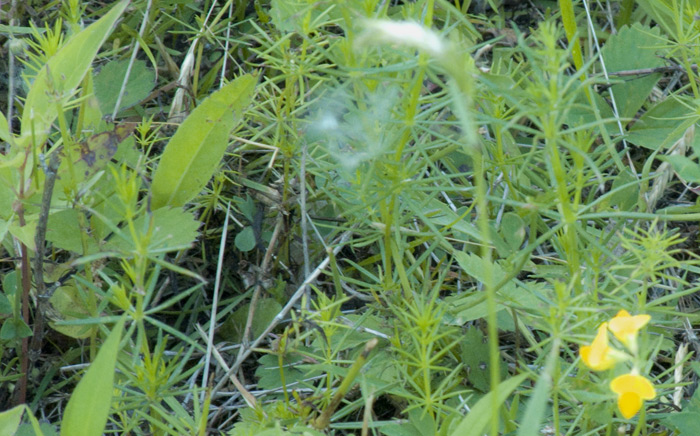
Fluff in the Strawberry Patch, Home Farm, Red Rock, East Chatham NY, May 30, 2009

It's wild strawberry season

This year promises to be a good one for wild strawberries. Plant life not adversely affected by the extraordinary rains we've had the last few days, like the wild strawberries in my field, is growing vigorously.

I think this darned leak is finally sealed?

We had another downpour last night - there were no leaks!. You can read about my long struggle to find and seal these two leaks at A Tale of Two Leaks.

Night camp

Wal-Mart Supercenter in Pittsfield MA

Wal-Mart Store #2228, 555 Hubbard Ave./Suite 12, Pittsfield, MA 01201 - (413) 442-1971

Teosinte and the Improbability of Maize

The ancestors of wheat, rice, millet, and barley look like their domesticated descendants; because they are both edible and highly productive, one can easily imagine how the idea of planting them for food came up. Maize can't reproduce itself, because its kernals are securely wrapped in the husk, so Indians must have developed it from some other species. But there are no wild species that resemble maize. Its closest genetic relative is a mountain grass called teosinte that looks strikingly different - for one thing, it "ears" are smaller than baby corn served in Chinese restaurants. No one eats teosinte, because it produces too little grain to be worth harvesting. In creating modern maize from this unpromising plant, Indians performed a feat so improbable that archaeologists and biologists have argued for decades over how it was achieved. Coupled with squash, beans, and avocados, maize provided Mesoamerica with a balanced diet, one arguably more nutritious than its Middle Eastern or Asian equivalent.

more...