Thursday, April 15, 2010 - Bosque Birdwatchers RV Park, San Antonio NM
< previous day | archives | next day >
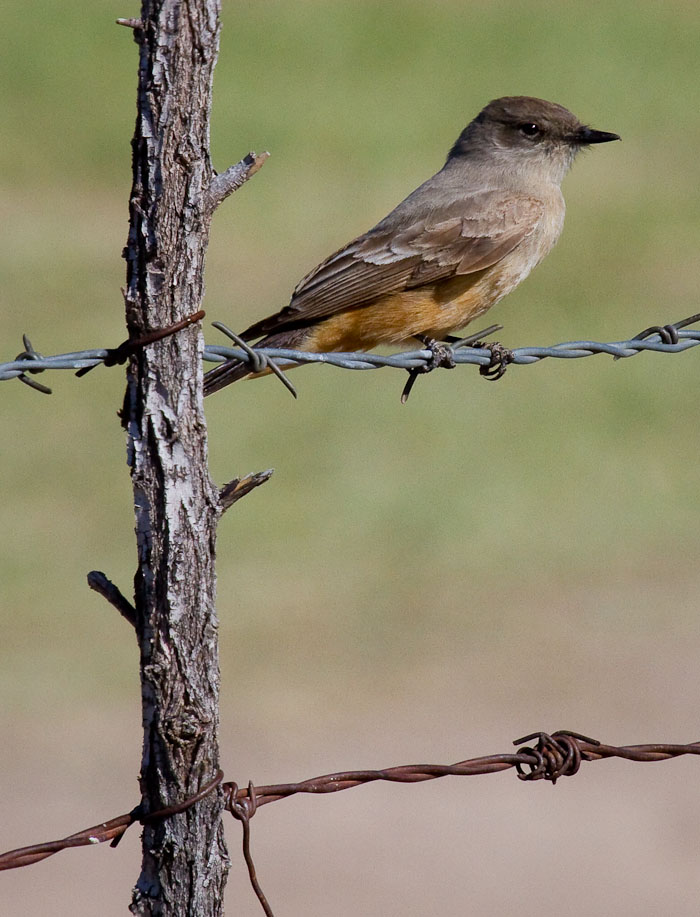
Say's Phoebe, San Antonio NM, April 15, 2010
I bagged a new bird!
New to me anyway. It was a beautiful spring morning for this mornings camera walk up the road toward San Antonio and the birds were out getting their breakfast. There were House Finches and American Goldfinches eating fresh elm seeds, Killdeer chasing worms across the cow pasture, and Western Kingbirds and this new-to-me Say's Phoebe hunting insects from their fence-wire perches. I got some great pictures too.
Yeah, I know
I got behind again in my posts here. But now I'm caught up from where I left off on Wednesday, April 7, 2010 - Bosque Birdwatchers RV Park, San Antonio NM.
Night camp
Site 16 - Bosque Bird Watcher's RV Park, San Antonio NM
- This is a basic, small Mom & Pop RV Park with full hookups.
- Verizon cell phone and Broadband service are available here with a strong signal.
- Locate Bosque Bird Watcher's RV Park on my Night Camps map
- Click for Google street view
- Check the weather in San Antonio NM
Party Differences
To me then it appears that there have been differences of opinion, and party differences, from the establishment of governments to the present day, and on the same question which now divides our country, that these will continue through all future times: that everyone takes his side in favor of the many, or of the few, according to his constitution and the circumstances in which he is placed...