Cave Creek Regional Park, Cave Creek AZ
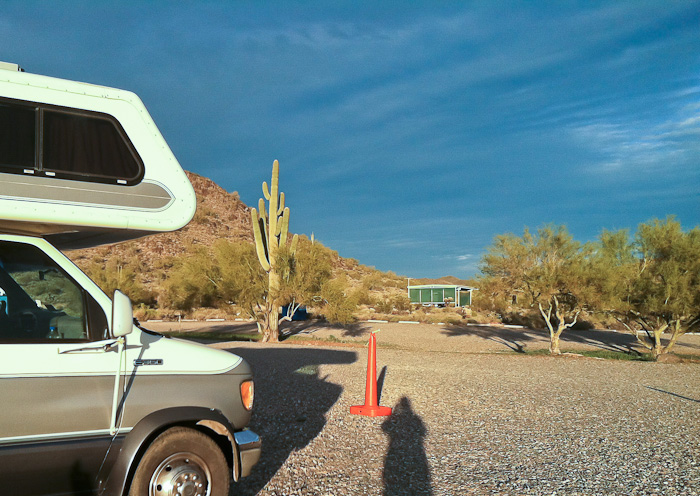
Saguaro Sunrise, Cave Creek Regional Park, Cave Creek AZ, February 1, 2012
Cave Creek Regional Park is a busy new RV park and recreational area near Cave Creek AZ.
This is a busy park and reservations are required but there is a large overflow parking area for those without reservations.
Cave Creek Regional Park, Cave Creek AZ
- Verizon cell phone and EVDO service - very good signal
- Locate this camp on my Night Camps map
- Check the weather here
Nights I've camped here
- Wednesday, February 1, 2012 - Cave Creek Regional Park, Cave Creek AZ
- Image: Saguaro Sunrise, Cave Creek Regional Park, Cave Creek AZ, February 1, 2012.
- Tuesday, January 31, 2012 - Cave Creek Regional Park, Cave Creek AZ
- Bad food? Who knows. Whatever it was, it looks like we'll be here a while. Jane was laid low overnight and is in no condition to fly out of Tucson later today as scheduled. She has rescheduled her flight for Thursday and we will stay here until Thursday morning and hopefully she can recover enough stability and strength to fly by then. Bummer. Image: Redeye to Phoenix, Plomosa Road, Quartzsite AZ, January 29, 2012.
- Monday, January 30, 2012 - Cave Creek Regional Park, Cave Creek AZ
- Image: The Road to Jerome, Jerome AZ, January 30, 2012.