Monday, December 3, 2012 - San Antonio Mechanic Shop, San Antonio NM
< previous day | archives | next day >
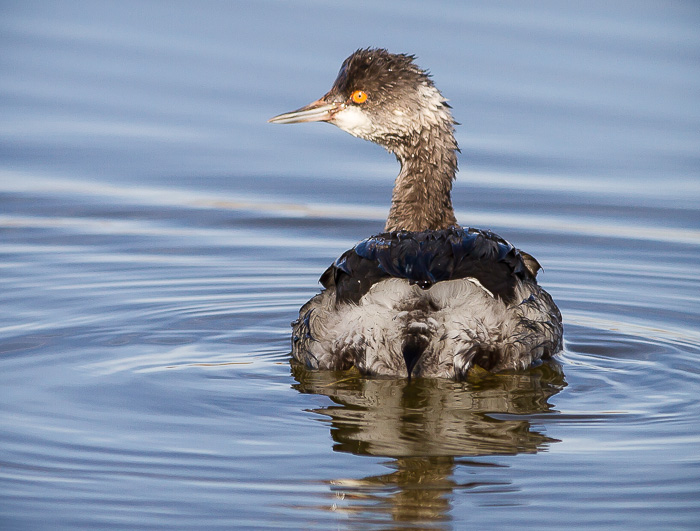
Eared Grebe, Bosque del Apache National Wildlife Refuge, San Antonio NM, November 30, 2012
Time for a tuneup
About the only thing I've done to this poor old Lazy Daze tuneup wise is change the spark plugs years ago. Salvador is going to change the plugs, install new plug wires, distributer cap and rotor. And change the transmission fluid, also long overdue. Things are so hard to reach on this big V8 in a van chassis this is a two day job so I get the dubious distinction of sleeping here again with my head 10 feet from busy US 380.
Nightcamp
Site 10 - Bosque Bird Watcher's RV Park, San Antonio NM
- This is a basic, small Mom & Pop RV Park with full hookups.
- Verizon cell phone and Broadband service are available here with a strong signal.
- Locate Bosque Bird Watcher's RV Park on my Night Camps map
- Click for Google street view
- Check the weather in San Antonio NM
A Good Christion Lion
A missionary was walking in Africa when he heard the ominous padding of a lion behind him. "Oh Lord," prayed the missionary, "grant in Thy goodness that the lion walking behind me is a good Christian lion."