Wednesday, January 27, 2010 - Bosque Birdwatchers RV Park, San Antonio NM
< previous day | archives | next day >
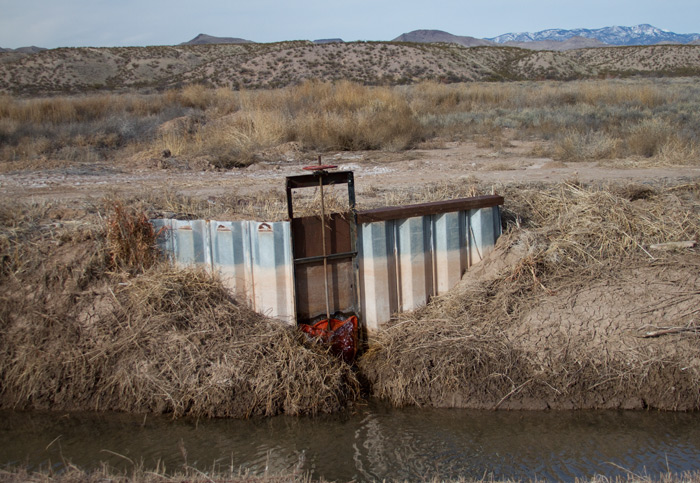
Leak, Bosque del Apache National Wildlife Refuge, San Antonio NM, January 27, 2010
The birds here at the Bosque National Wildlife Refuge live in a closely monitored and managed environment. The staff is constantly moving water around and a day or so ago they started a big pump to send water down through this meadow and into the shallow ponds where so many water birds roost and get their pictures taken. A bit is leaking out of the meadow through this old valve into the acequia (canal) in the foreground. I'm not sure where the acequia goes but I'm guessing it ends up in those same ponds. Now I'm curious - I'll have to check it out next time I walk down to the ponds.
Night camp
Site 16 - Bosque Bird Watcher's RV Park, San Antonio NM
- This is a basic, small Mom & Pop RV Park with full hookups.
- Verizon cell phone and Broadband service are available here with a strong signal.
- Locate Bosque Bird Watcher's RV Park on my Night Camps map
- Click for Google street view
- Check the weather in San Antonio NM
Do We Really Mean What We Say
There are a lot of things that make me wonder whether we ever look ourselves straight in the face and really mean what we say when we are patting ourselves on the back.
Eleanor Roosevelt in a letter to a refugee