Monday, January 11, 2010 - Leasburg Dam State Park, Radium Springs NM
< previous day | archives | next day >
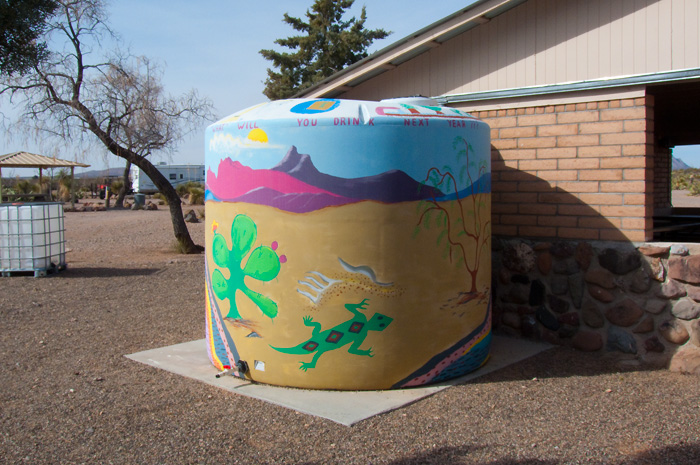
"What" Will You Drink Next Year ???, Pancho Villa State Park, Columbus NM, January 10, 2010
I'm out of here today - off to find some Mobil 1 for an oil change and someone to do the job. Then I'll probably head over to Leasburg Dam State Park, Radium Springs NM for the night, with the goal of finding myself up at the private Bosque Bird Watcher's RV Park, San Antonio NM for the January 14th and 15th NM employee furlough when the State Parks are closed.
On roosters
Roosters have been crowing here in Columbus for hours now (I got up about 3:30 and it's now sunrise) and it is a comforting greeting to the new day. It's a sound that takes me back to my childhood in Red Rock when chickens were an integral part of the community, like they still are here. I miss that. Red Rock needs its chickens back.
Night camp
Site 2 - Leasburg Dam State Park, Radium Springs NM
- Verizon cell phone service - good signal
- Verizon EVDO service - good signal
- Go to Leasburg Dam State Park website
- Locate Leasburg Dam State Park on my Night Camps map
- Check the weather here