Monday, July 27, 2009 - Pittsfield MA
< previous day | archives | next day >
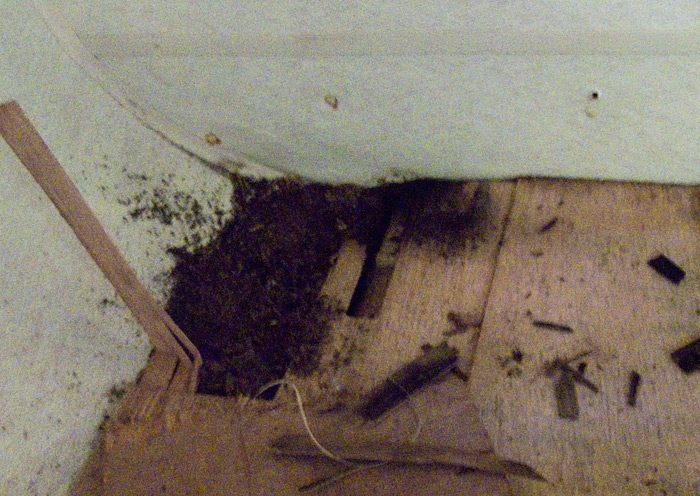
Overhead water damage under storage box, July 19, 2009
Nasty
And a lousy picture to match my lousy mood...
I can't proceed with my big plans for the overhead until I have this leak fixed and know it's fixed for sure. I have to be able to crawl up in there to look and feel for dampness. That won't be so easy once I've built what I'm building. Very frustrating.
At least it rains every day this summer. Holy Cow does it ever rain! All the rain has been a mixed blessing. While it gets in the way of having a dry exterior for sealing the leaks, if it weren't for the ongoing torrential rains I never would have believed this spot leaks in the first place. I've been all over the roof and everything looks fine up there. Very frustrating indeed.
Night camp
Wal-Mart Supercenter in Pittsfield MA
Wal-Mart Store #2228, 555 Hubbard Ave./Suite 12, Pittsfield, MA 01201 - (413) 442-1971
- Good level parking lot
- Verizon cell phone service is good
- Verizon EVDO Broadband service is good
- Find other Wal-Marts in the area
- Check the weather here
Ask What Surprised Them
I was afraid of flying for a long time and could only travel vicariously. When friends came back from faraway places, it wasn't just out of politeness that I asked what they saw. I really wanted to know. And I found the best way to get information out of them was to ask what surprised them. How was the place different from what they expected? This is an extremely useful question. You can ask it of the most unobservant people, and it will extract information they didn't even know they were recording.
The Age of the Essay, Paul Graham, September 2004