Sunday, February 17, 2008 - Rockhound State Park, Deming NM
< previous day | archives | next day >
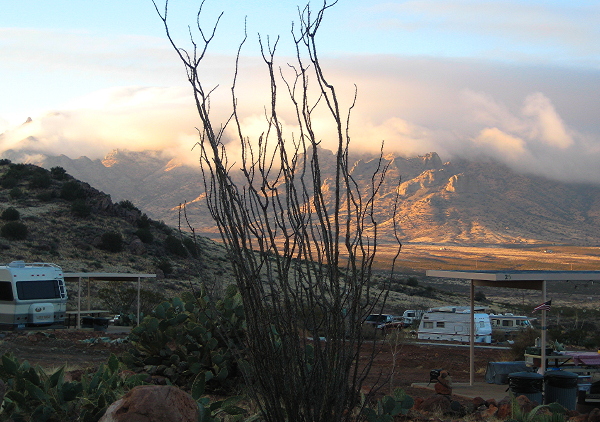
Sunrise at Rockhound State Park
Rockhound State Park backs up against a ridge on the north side of this little valley and overlooks the mountainside to its south. The early morning light playing off that mountain ridge and the clouds it precipitates from the cool moisture passing by on the prevailing winds is endlessly fascinating.
And drop dead gorgeous. What a glorious view to wake up to.
Night camp
Site 28 - Rockhound State Park, Deming NM
- Verizon cell phone service - good signal
- Verizon EVDO service - good signal
- Find other references to Rockhound on this website
- List the nights I've camped here
- Go to the Rockhound State Park website
- Get a Google map of this area
- Check the weather here
Something Useful Can Be Artful
A life, I believe - lived well and openly - with a certain sort of careful attention to form and function - creates art - or, at the very least, inspires it. I believe that art is contained in the ordinary events, that the small things we see and hear and learn everyday provide opportunities to explore parts of ourselves or our society in a way that can actually produce art. Whether it is a story you leave behind or one you take with you, I believe that any given situation is rich with opportunities to participate in the creation of something useful that can also be artful.
Living Art - Photography By Catherine Jamieson