Propane Safety
Propane is widely used in the recreational vehicle world. I've gathered here some basic information about propane how to use it safely.
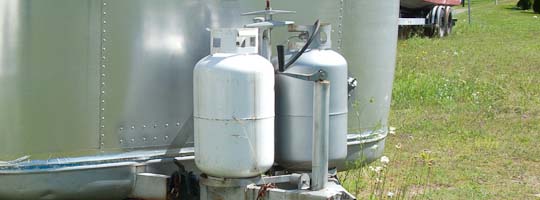
Operating appliances safely
Approved and properly adjusted appliances are very important. Improper flame adjustment (which you can detect by a yellow flame at the burner tip) is dangerous. With adequate ventilation, an operating burner gives off mostly harmless products such as carbon dioxide and water vapor. However, a propane appliance starved of oxygen can quickly produce dangerous amounts of carbon monoxide and may result in asphyxiation. When operating your oven and/or range, open a vent and window to insure an adequate supply of air for safe operation. Never use the oven for heating the recreational vehicle.
Carbon monoxide poisoning
Carbon monoxide is a colorless and odorless gas, and can't be detected through your sense of smell. If you are exposed to carbon monoxide, you may experience any or all of these symptoms:
- Headaches, tightness across the forehead and temples
- Weariness, weakness, dizziness and vomiting
- Loss of muscular control
- Watering and smarting of the eyes
NOTE: If any of these symptoms should develop, get into the fresh air immediately, and have your propane system checked and repaired as needed.
How to guard against carbon monoxide
- Never use the oven or stove top burner to heat your vehicle.
- Never use any camping or other portable heater that is not designed and approved for your vehicle or is not approved for use with propane gas.
- Never take a barbecue grill (propane or charcoal) inside your vehicle to cook or heat with.
- Have all appliances, including venting and burner systems, tested for proper operation by a qualified propane gas service person.
- Always be sure your vehicle is properly ventilated.
- There are commercial detectors available that can be easily installed inside a camper to warn of the presence of carbon monoxide.
- Heaters used in RV's must be approved for RV use and be of a sealed combustion type or have other special vent systems.
Propane safety tips
When produced, propane is both colorless and odorless. For safety reasons, a chemical odorant is added so that, in the event of a leak, you can detect the escaping gas by its strong, distinct smell. Become familiar with it's odor.
Under certain circumstances, propane gas may lose the distinctive odor that was added. This is sometimes called “odor fade,” and it can occur both in new steel containers when first placed into service and in used steel containers left open to the atmosphere for a long time. In addition, under certain circumstances not everyone can smell the odorant in propane. Physical conditions such as competing odors, commons colds and allergies, smoking, etc. may lessen a person's ability to smell.
If you think the odor of your propane gas is weak, or if your sense of smell is impaired, call your propane supplier. A service technician can verify the odor of the propane gas in your tank. And if your sense of smell is impaired, consider installing an electronic gas detector in your RV.
If you suspect a leak, follow these steps:
- Get all occupants out of the vehicle immediately.
- Do not operate electrical switches or light a match.
- Turn off all gas appliances.
- Close all cylinder or tank supply valves immediately.
- Open all doors and windows and let fresh air blow away the escaped gas.
- Call a trained gas service person and do not turn the gas on again until the leak has been found and corrected.